
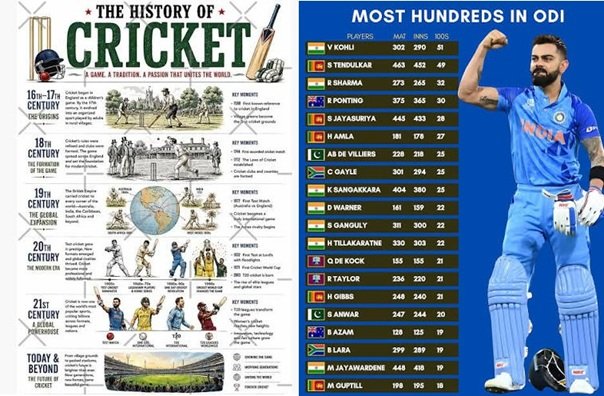

A timeline is a manner of arranging events, sports activities, or vital dates in chronological order. In simple words, a timeline shows what happened, when it occurred, and what got here in advance than or after it. Timelines are commonly utilized in facts, training, assignment planning, biographies, sports activities, business commercial enterprises, internet sites, and social media.
A timeline may be provided as a horizontal or vertical line, a listing of dates, a table, or an interactive picture. Its essential reason is to make the series of activities a good deal less hard to understand.
For example, if a person wants to explain the records of a cricket group, they might create a timeline beginning with the agency’s first global healthy and then listing the most important tournaments, critical victories, information, and unique activities year via 365 days.
What Is the Meaning of Timeline?
The word timeline normally refers to a chronological illustration of sports. Cambridge Dictionary defines it as the order in which events took place or an example that indicates that order. It can also refer to a deliberate period in which some issue is predicted to appear.
In simple language:
Timeline = Events organized in keeping with time.
For example:
- 2000 – Event A
- 2005 – Event B
- 2010 – Event C
- 2015 – Event D
- 2020 – Event E
This makes it easy to understand the improvement from the earliest occasion to the most recent one.
How Does a Timeline Work?
A timeline usually starts with the earliest date and moves towards the most recent date. Each crucial occasion is located on the incredible point steady with while it occurred.
For example:
2010 → 2012 → 2015 → 2018 → 2020 → 2025
Each date can include a short description of what occurred at some point during that duration.
A timeline does not have to continually use real dates. Depending on the issue, it could use years, months, days, hours, or possibly minutes.
For example, a historic timeline might also cover masses of years, while an assignment timeline can also cover numerous months.
Why Is a Timeline Important?
Timelines make information easier to understand due to the fact they put together sports activities in a logical collection.
A prolonged statistics can every so often be difficult to follow when all of the data is offered in paragraphs. A timeline separates vital sports and places them in chronological order.
Some not unusual benefits of timelines consist of:
- Making ancient events an awful lot less hard to recognize
- Showing the order of sports
- Helping readers recall crucial dates
- Organizing research facts
- Showing the development of a person, group, company, or event
- Tracking assignment milestones
- Comparing sports from wonderful durations
- Providing a quick evaluation of extended statistics
Types of Timelines
There are several forms of timelines. The most suitable type is predicated upon the statistics being provided.
1. Historical Timeline
A historical timeline suggests essential activities from the past in chronological order.
For instance, a timeline of the facts of a rustic might encompass essential political, cultural, financial, and social occasions.
Historical timelines are usually carried out in:
- Schools
- Museums
- History books
- Research initiatives
- Educational internet sites
- Documentaries
2. Personal Timeline
A non-public timeline suggests essential events in a character’s life.
For example:
- 2000 – Birth
- 2006 – Started faculty
- 2015 – Completed secondary schooling
- 2019 – Graduated
- 2022 – Started a business enterprise
A private timeline can be useful for biographies, resumes, circle of relatives’ histories, and existence testimonies.
3. Project Timeline
A mission timeline indicates the special levels of an undertaking and when they may be expected to rise up.
For instance:
- January – Project planning
- February – Research
- March – Development
- April – Testing
- May – Launch
Project timelines help organizations understand cut-off dates, milestones, and the expected duration of various activities.
4. Business Timeline
An enterprise timeline can display the information and development of a commercial enterprise.
It may additionally encompass:
- Company founding
- Product launches
- Major partnerships
- Expansion
- Important achievements
- New workplaces
- Major commercial enterprise adjustments
This sort of timeline enables clients and employees to recognize how a company has grown over the years.
5. Sports Timeline
A sports activities timeline shows vital activities within the statistics of a player, crew, event, or undertaking.
For example, a cricket timeline can also include:
- First international match
- First critical in shape
- Important collection victories
- World Cup appearances
- Major records
- Championship victories
Sports timelines are especially beneficial whilst readers want to recognize the facts of a team or opposition fast.
6. Event Timeline
An event timeline shows what took place in some unspecified time in the future of a selected event and at the same time as each diploma happened.
For example, a convention timeline can also include:
- 9:00 AM – Registration
- 10:00 AM – Opening ceremony
- eleven:00 AM – Main presentation
- 1:00 PM – Lunch
- 3:00 PM – Panel speak
- five:00 PM – Closing consultation
7. Interactive Timeline
An interactive timeline allows clients to click on, scroll, zoom, or pick unique dates to discover more facts.
Interactive timelines are frequently used on internet websites, instructional systems, museums, and digital courses.
Timeline Examples
An easy timeline can appear to be this:
2015 → 2016 → 2017 → 2018 → 2019
- 2015: Project starts off
- 2016: First main development
- 2017: Product launched
- 2018: Business expands
- 2019: New market entered
This format now shows the order in which the events came about.
Timeline Example in Cricket
Suppose you want to create a timeline about a cricket company.
You must install the records like this:
| Year | Event |
|---|---|
| 1950 | Team begins international journey |
| 1960 | Major international series |
| 1970 | Important tournament appearance |
| 1980 | Major player records milestone |
| 1990 | World Cup participation |
| 2000 | New generation of players |
| 2010 | Major international achievement |
| 2020 | Modern era |
| 2025 | Latest major developments |
This is referred to as a cricket timeline because, in truth, the occasions are organized ordinary with once they happened.
Timeline vs History
A timeline and a statistics article are associated; however, they may be now not exactly the equal.
A records article typically explains sports activities in detail and gives background, context, and evaluation.
A timeline focuses especially on the chronological order of activities.
For example, an editorial about a cricket organization’s statistics may also comprise numerous paragraphs about each technology. A timeline may want to definitely put together the most vital activities three hundred and sixty 5 days with the aid of 12 months.
Therefore, a timeline may be taken into consideration as a concise manner of providing historical facts.
Timeline vs Schedule
A timeline can describe past or future sports, while a schedule typically specializes in planned sports.
For example:
Timeline of a cricket team:
1955 – First Test
1973 – First ODI
2007 – First T20 World Cup look
Schedule:
10:00 AM – Match starts
1:30 PM – Lunch
2:15 PM – Second session
So, a timeline can describe what has already happened; at the same time, a timeline is usually used to provide a reason for what is planned.
How to Create a Timeline
Creating a timeline is especially easy.
Step 1: Choose the Topic
First, decide what the timeline can be about.
Examples embody:
- An individual’s existence
- A cricket organization
- A corporation
- A historic period
- A project
- A shape
Step 2: Collect Important Events
Make a list of the crucial sports associated with your problem depending on the number.
Try to include notable facts this is applicable to the timeline.
Step 3: Add Dates
Add the proper date, month, or year for each event.
Accurate dates are crucial because the primary reason for a timeline is to reveal chronological order.
Step 4: Put Events in Order
Arrange the events from the earliest to the most recent.
For example:
2000 → 2005 → 2010 → 2015 → 2020
Step 5: Add Short Descriptions
Give every event a brief rationalization so readers can quickly understand what took place.
Step 6: Choose a Format
You can gift your timeline as:
- An easy listing
- A desk
- A horizontal picture
- A vertical timeline
- An interactive internet web website online
- A video timeline
Advantages of Using a Timeline
Timelines provide numerous blessings on the same time, as facts consist of dates and sequences.
Easy to Understand
Readers can fast turn out to be privy to at the same time as activities happened.
Organizes Information
A timeline turns scattered dates into a prepared collection.
Saves Time
Readers can take a look at a timeline in place of reading an extended explanation.
Shows Progress
Timelines can display how a problem advanced over a period of time.
Useful for Education
Students can use timelines to not forget vital ancient events and understand their relationship.
Useful for Websites
Websites can use timelines to present biographies, organizational histories, sports information, and historical records.
Where Are Timelines Used?
Timelines are used in many particular areas.
Education
Teachers use timelines to provide an purpose for ancient periods, medical discoveries, biographies, and different topics.
Business
Companies use timelines to expose their history, product development, and undertaking milestones.
Sports
Sports internet websites use timelines to give an reason for team histories, participant careers, tournaments, and rivalries.
Research
Researchers can use timelines to set up sports and understand how tendencies happened through the years.
Project Management
Project corporations can use timelines to put together duties, milestones, and deadlines.
Websites and Media
Online courses use timelines to offer long-term memory in an easy chronological layout.
What Makes a Good Timeline?
An appropriate timeline needs to be clean, accurate, and easy to follow.
Important factors consist of:
- Correct dates
- Chronological order
- Relevant activities
- Short descriptions
- Clear formatting
- Easy-to-read layout
A timeline ought to not embody pointless information that makes the collection hard to apprehend.
Frequently Asked Questions
What is a timeline in plain terms?
A timeline is a list or visual representation of events organized in the order wherein they occurred.
What is the primary cause of a timeline?
The predominant reason of a timeline is to expose the chronological order of activities and make the relationship among certainly one of a type events a whole lot much less complex to understand.
What is an example of a timeline?
A clean instance is a person’s life timeline showing their transport, schooling, career, important achievements, and distinct vital sports in chronological order.
Can a timeline display destiny occasions?
Yes. A timeline can also be used for planned or expected destiny events, which include mission milestones and deadlines.
What are the splendid forms of timelines?
Common sorts encompass ancient timelines, private timelines, assignment timelines, business enterprise timelines, sports activity timelines, event timelines, and interactive timelines.
What is a timeline in statistics?
A historic timeline is a chronological presentation of critical ancient activities, commonly prepared from the earliest event to the present day.
Is a timeline similar to a time desk?
No. A timeline can display past, present, or future sports, while an agenda generally focuses on planned sports and their timing.
Conclusion
A timeline is a chronological manner of presenting sports activities in order that readers can easily understand what happened and when it happened. It may be used for historical research, schooling, sports activities, business, undertaking planning, biographies, and hundreds of various applications.
The primary idea is simple: gather critical activities, emerge as aware of their dates, set up them in chronological order, and offer a clear description of every event. This makes huge quantities of time-based records much easier to understand and keep in mind.